General Vestibular
Dizziness, vertigo, imbalance, and motion sensitivity affecting your daily life. Whether from inner ear disorders, aging, or other causes, vestibular rehabilitation can help restore your balance and confidence so you can move freely again.
22 articles in this category

How Long Does Perimenopause Dizziness Last?
Perimenopause dizziness runs on two clocks: how long a single spell lasts, and how long the hormonal window stays open. Here is what determines each one, and why waiting it out is rarely the right plan.

VOR x1 vs VOR x2: Which Gaze Exercise Do You Need?
VOR x1 keeps the target still. VOR x2 moves it against your head and roughly doubles the demand on your reflex. Here is what the research actually says about which one drives change, how often to do them, and why your form matters more than your rep count.

How to Stop Dizziness Before Your Period (And How Long It Lasts)
Premenstrual dizziness is driven by a real, predictable estrogen drop, and it usually eases within days. Here's how long it actually lasts, why a stronger vestibular baseline makes the dip less noticeable, and how low iron can make it worse.

Can Your Neck Make You Dizzy? Cervicogenic Dizziness
When neck pain and dizziness show up together, your neck may be the cause. Here's how cervicogenic dizziness works, how it differs from vertigo, and what actually helps.

Is Menopause Making You Dizzy? Why It Happens and What Helps
Dizziness and vertigo are among the most common but least-discussed symptoms of perimenopause and menopause. Here's why falling estrogen affects your inner ear and balance, the conditions most often behind it, and what actually helps.
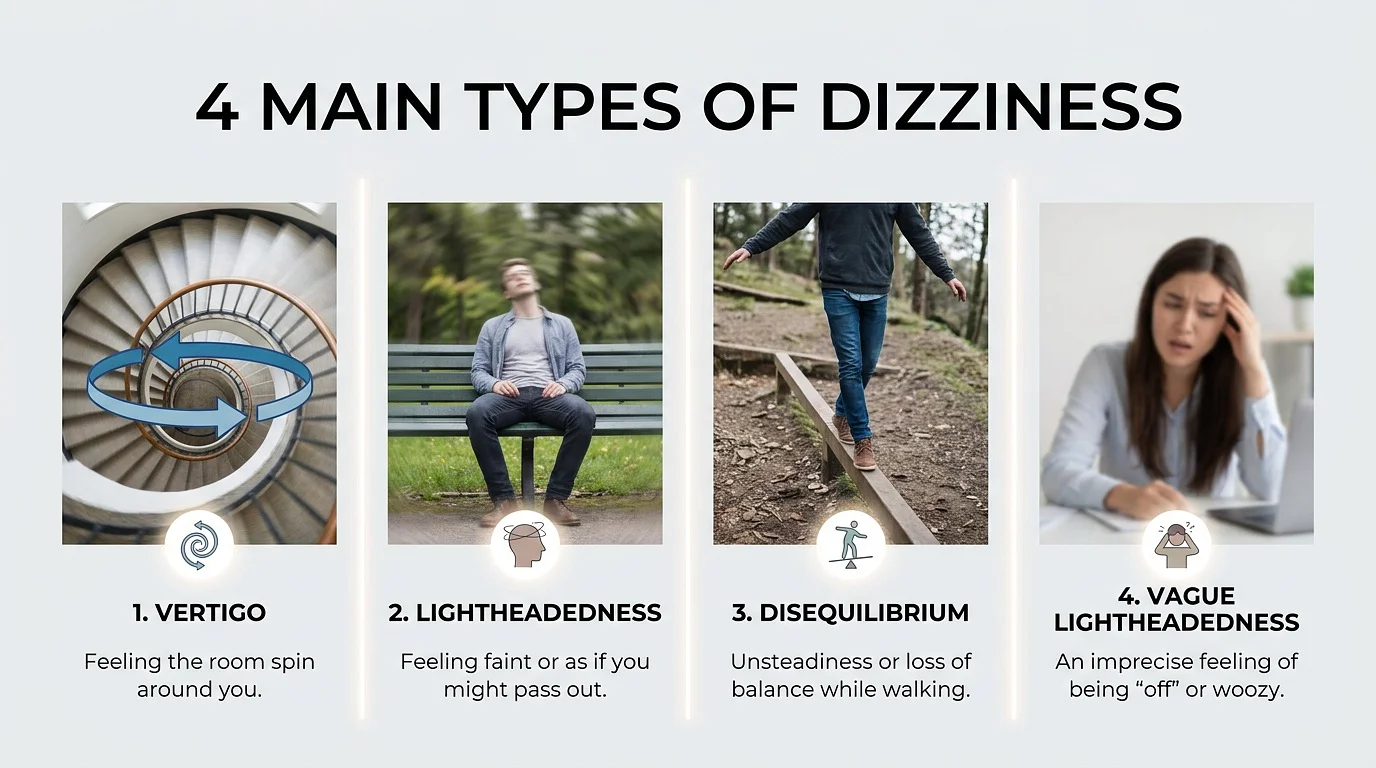
Lightheaded, Dizzy, or Spinning? What Your Type of Dizziness Is Telling You
Dizzy can mean spinning vertigo, faintness, unsteadiness, or a vague floaty feeling, and the kind you have points to the cause. Here's how to tell the four types of dizziness apart, plus the timing-and-triggers question that helps most and when to seek care.

Vestibular Migraine vs. BPPV: How to Tell Them Apart
BPPV and vestibular migraine both cause vertigo, but their timing, triggers, and treatment are completely different. Here's how to tell which one is behind your dizziness, and what to do next.

Why Do I Still Feel Like I'm Rocking After a Cruise or Flight? Understanding Mal de Débarquement
That lingering rocking, swaying feeling after a cruise or flight has a name: Mal de Débarquement Syndrome. Here's why it happens, how long it lasts, and what actually helps you feel steady again.

Why Do I Get Vertigo or Dizziness Before My Period?
If your vertigo or dizziness ramps up in the days before your period and eases once it starts, that monthly pattern is real. Here's why it happens, with or without a diagnosis, and what actually helps.

Why Does Scrolling on Your Phone Make You Dizzy?
That woozy, off-balance feeling after scrolling is real, and it has a name. Here's why screens trigger visual vertigo, who's most prone, and how to retrain your balance.
Dizzy at the Grocery Store? A Course Is Coming.
Carly is building The Grocery Store “Feeling Off” Reset — a step-by-step program for feeling floaty, off, or overwhelmed in stores and busy places. Join the waitlist and get her free Grocery Store Survival Guide today, plus founding-member pricing when doors open.
Free guide, instantly. No spam — unsubscribe anytime.