Can BPPV Be Cured? The Hopeful Truth About Treatment
BPPV has one of the highest treatment success rates in medicine—80-90% with a single session. Learn what "cured" really means and why there's genuine reason to hope.
Will I ever feel normal again?
If you've experienced BPPV, you know exactly why that question keeps you up at night. One moment you were fine. The next, the entire room was spinning violently, and you were gripping the bed or floor just trying not to fall. Maybe it happened when you rolled over in bed. Maybe you bent down to pick something up. Either way, it was terrifying.
And now you're wondering: Is this my life now? Can BPPV actually be cured, or am I going to be living in fear of the next episode forever?
Here's something that might surprise you: BPPV has one of the highest treatment success rates of any condition in medicine. We're talking 80-90% resolution with a single treatment session. That's not wishful thinking. That's what the research consistently shows. If you want the plain-English version of what BPPV actually is first, start with what BPPV is, the name, the crystals, and why the room suddenly spins.
The short answer: BPPV is one of the most treatable causes of vertigo. It's usually resolved with simple repositioning maneuvers (like the Epley) that move displaced inner-ear crystals back where they belong, often in just one or a few sessions. BPPV is not permanent, though it can return, and if it does, the same treatment usually works again.
Yes, BPPV Can Be Successfully Treated—Often in Just One Visit
If you've been Googling your symptoms at 2 AM, you've probably found a lot of confusing and conflicting information. So let's start with the facts.
Studies consistently show that 80-90% of people with BPPV are symptom-free after a single treatment session. When treatment is performed by an experienced vestibular specialist, that number climbs even higher—some studies report success rates above 95% within 1-3 sessions.
Why is BPPV so treatable? Because there's nothing actually broken or damaged.
BPPV happens when tiny calcium carbonate crystals (called otoconia) that normally live in one part of your inner ear become dislodged and drift into your semicircular canals. When they're in the wrong place, they send false signals to your brain about movement, which creates that intense spinning sensation.
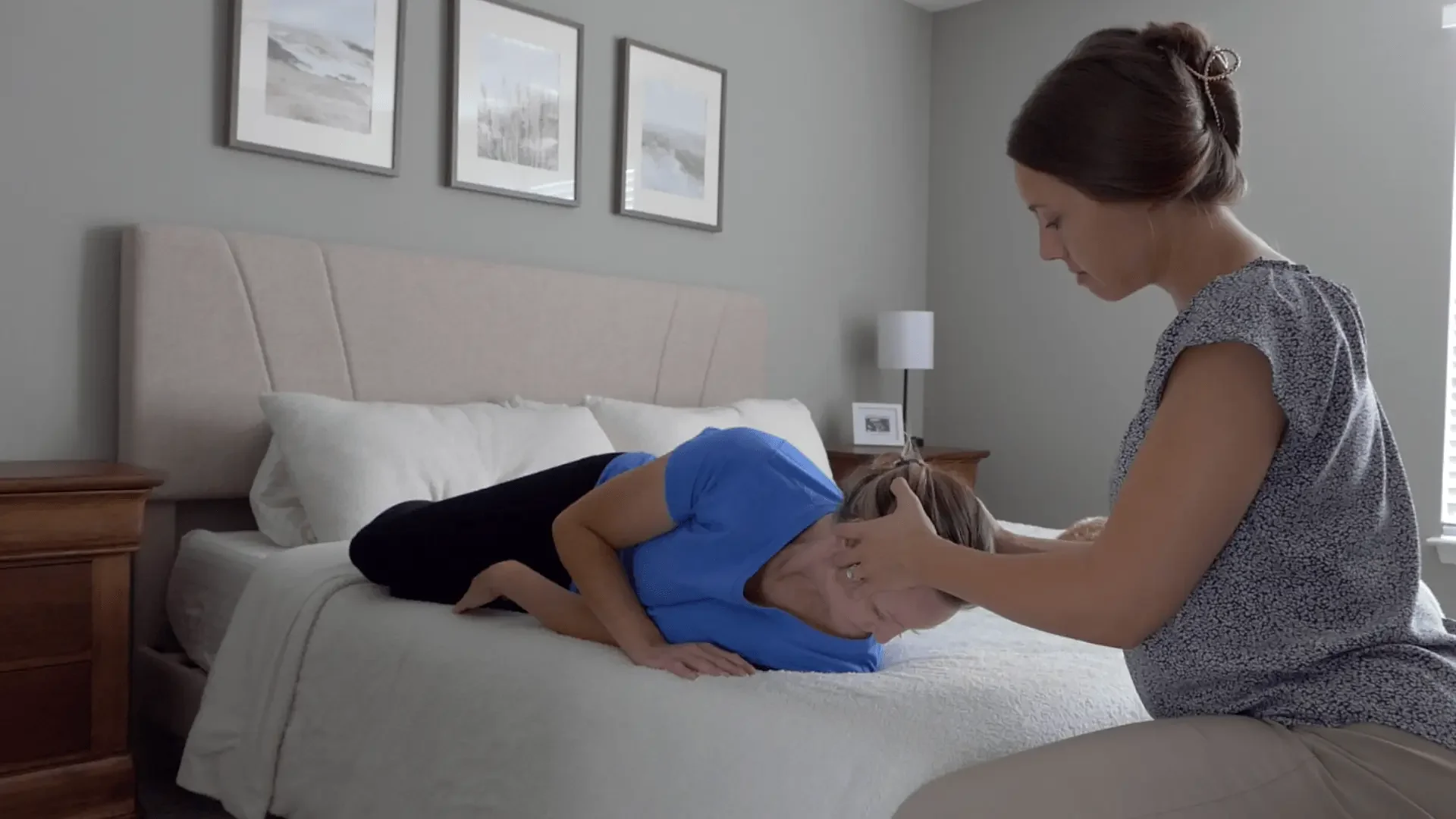
The treatment doesn't involve medication, surgery, or hoping your body figures it out. It involves specific head movements that guide those crystals back where they belong. Once they're repositioned, the vertigo stops.
Think of it like resetting a dislocated joint. The problem is mechanical, and the solution is mechanical.
Understanding What "Cured" Really Means with BPPV
Here's where we need to be honest with you, because understanding this will save you a lot of anxiety down the road.
When we talk about BPPV being "cured," we mean that your current episode is resolved. The crystals have been repositioned. The vertigo has stopped. You can move your head again without the world spinning.
But BPPV can come back. Not because the treatment failed, but because of how the inner ear works.
We all have these crystals in our ears. They're supposed to be there. But sometimes they dislodge again—due to age, head position during sleep, minor head bumps, or sometimes for no clear reason at all. This is especially true if you have certain risk factors like migraines, vitamin D deficiency, or you're over 60.
Here's the reassuring part: if BPPV does come back, it's just as treatable the second, third, or tenth time. The same techniques that worked before will work again.
One long-term study followed patients for 20 years and found that 77% never experienced a recurrence at all. And among those who did, most only had one or two additional episodes over that entire time period.
So yes, BPPV can recur. But that doesn't mean you're "not cured." It just means you have ears, and ears are quirky sometimes.
How BPPV Treatment Actually Works
If you've never been treated for BPPV before, you might be imagining something complicated or high-tech. The reality is much simpler.
BPPV treatment involves a series of specific head and body movements called canalith repositioning maneuvers. The most well-known is the Epley maneuver, but there are several others depending on which ear canal is affected.
Here's what to expect:
• The maneuver takes only a few minutes to perform
• You may feel brief vertigo during the movements (this actually confirms the diagnosis)
• Many people feel significantly better immediately afterward
• Others need 2-3 sessions to fully resolve symptoms
The key is accurate diagnosis. BPPV can affect different canals in your inner ear, and each one requires a slightly different treatment approach. This is why those YouTube videos don't always work—you might be doing the right maneuver for the wrong canal, or doing it on the wrong side entirely.
When treatment is done correctly by someone trained in vestibular disorders, the success rate is remarkably high. Studies show that experienced providers achieve resolution in over 95% of patients.
Curious about the treatment timeline? Our article on how long vestibular therapy takes to work breaks down what to expect.
Why You Might Still Feel "Off" After Treatment (And Why That's Normal)
Here's something important that doesn't get talked about enough: even after successful BPPV treatment, you might still feel a little off for a while.
This is called residual dizziness, and it affects 30-50% of people after their BPPV is resolved. It's not the intense room-spinning vertigo. It's more like:
• A vague sense of lightheadedness
• Feeling unsteady when walking
• A foggy or "off" sensation
• Brief wooziness with head movements
This is NOT your BPPV coming back. It's your brain recalibrating.
Think about it: your brain has been receiving incorrect signals from your inner ear for days, weeks, or even months. It adapted to those signals. Now that the crystals are back where they belong and the signals are correct again, your brain needs a little time to readjust.
The research is reassuring here. One study found that residual dizziness had a median duration of just 10 days. Most people feel completely back to normal within 2-3 weeks, and virtually no one still has residual dizziness at the 3-month mark.
What helps during this time?
• Gentle movement and walking (don't stay in bed all day)
• Returning to normal activities as tolerated
• Time and patience
• Vestibular exercises if recommended by your provider
If your residual dizziness persists beyond 3-4 weeks, or if you start experiencing true spinning vertigo again, it's worth coming back for a follow-up. Sometimes the crystals have moved to a different canal, or there's something else going on that needs attention.
Is BPPV permanent?
No. BPPV is not a permanent condition. It happens when tiny calcium crystals in your inner ear drift into the wrong canal, and a trained provider can guide them back with specific head-position movements. Most people feel substantially better quickly once the crystals are repositioned
Can BPPV Come Back?
Let's address this head-on, because worrying about recurrence is exhausting.
Yes, BPPV can come back. Studies show an annual recurrence rate of about 15-20%. That means the majority of people—80-85%—won't have another episode in any given year.
Certain factors can increase your risk of recurrence:
• History of migraines (especially vestibular migraines)
• Age over 60
• Low vitamin D levels
• Hypertension or cardiovascular conditions
• Previous head trauma
But here's what I want you to take away from this: recurrence doesn't mean treatment failed. It just means another crystal got loose. And if it happens, you'll recognize the symptoms faster, get treated sooner, and recover more quickly because you know what you're dealing with.
Some things that may help reduce your risk:
• Have your vitamin D levels checked and supplement if deficient
• Manage migraines if you have them
• Stay active and keep your vestibular system engaged
• Avoid sleeping flat on your back if you've had multiple episodes
Why BPPV Is One of the Most Treatable Conditions in Medicine
If you've been dealing with chronic health issues or have already been through the frustrating cycle of tests and doctors and "we can't find anything wrong," BPPV might actually be a bright spot in your healthcare journey.
Here's the perspective:
• BPPV has a clear, identifiable cause (displaced crystals)
• There's a direct, physical treatment that addresses that cause
• Success rates are 80-95%, often in a single session
• No surgery, no long-term medication, no "learn to live with it"
Compare that to many other conditions that require ongoing management, uncertain outcomes, or "we're not sure why this is happening." BPPV is refreshingly straightforward.
People who get properly treated for BPPV go back to their lives. They drive again. They travel. They play with their kids or grandkids. They exercise. They stop avoiding head movements and live without that constant low-level fear.
That can be you too.
Don't Wait—Treatment Works Best with an Accurate Diagnosis
Here's the frustrating reality: many people suffer with BPPV symptoms for weeks or months before finding the right help. They see multiple doctors. They get MRIs and CT scans that come back normal. They try meclizine, which makes them drowsy but doesn't fix the problem.
If you're experiencing signs of BPPV—like vertigo triggered by rolling over in bed, looking up, or bending down—you don't have to keep waiting.
Seeing a vestibular specialist matters because:
• We can determine exactly which canal is affected
• We use the correct maneuver for your specific type of BPPV
• We can identify if something else is contributing to your symptoms
• We get you better faster, with fewer trial-and-error approaches
If you've tried the Epley at home without success, that doesn't mean BPPV treatment doesn't work. It might mean you were targeting the wrong canal or doing the movements incorrectly. It's worth getting an expert evaluation before assuming the worst.
You Don't Have to Live With This
We know how scary BPPV is. We know you've probably been lying awake wondering if you'll ever feel normal again, if you'll be able to drive, if you'll have to plan your whole life around avoiding certain movements.
The answer, for the vast majority of people, is that you can and will get better. BPPV is not a life sentence. It's not something you just have to "live with." It's one of the most fixable problems in medicine.
If you're in the Fishers or Indianapolis area and you're ready to get answers, we'd love to help. A proper evaluation usually takes less than an hour, and many patients walk out the same day with their vertigo resolved.
Call us at (317) 804-1222 or schedule a consultation to take the first step toward getting your life back.
We do more than treat symptoms — we listen, dig deep, and help you understand what's really going on. Through expert care, honest guidance, and a whole lot of support, we help you move from feeling overwhelmed to steady, confident, and back in control.