Can a Concussion Cause Vertigo?
Carly Clevenger, PT, DPT••7 min read
Dizziness after a concussion is more common than most people realize. Learn what causes post-concussion vertigo, why "rest and wait" doesn't always work, and how vestibular therapy can help you recover.
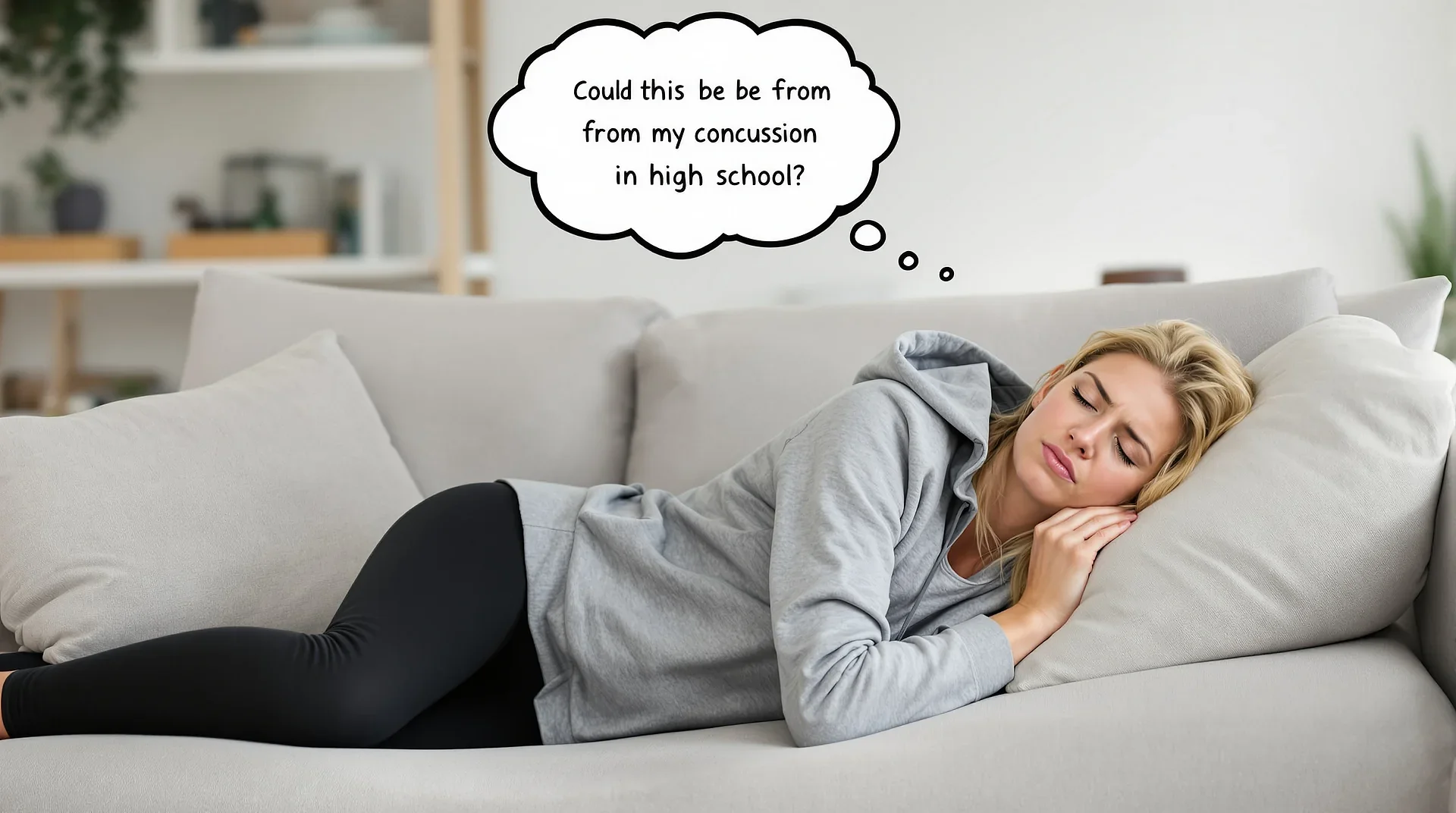
You hit your head weeks ago. Maybe it was a fall, a car accident, or a sports collision. The headaches have mostly faded. But the dizziness? It's still there. Every time you roll over in bed or look up too fast, the room spins. You feel off-balance walking through the grocery store. And nobody seems to have answers.
If this sounds familiar, you're not alone. And you're not imagining things.
Here's the truth: concussions absolutely can cause vertigo. It's one of the most common symptoms after a head injury. And in most cases, it's highly treatable once you get the right diagnosis.
How Common Is Vertigo After a Concussion?
More common than most people realize. Dizziness is actually the second most common concussion symptom, right after headaches. Research shows that up to 80% of people experience some form of vertigo or dizziness in the first few days after a head injury.
For most people, the dizziness fades within a few weeks. But not everyone is that lucky.
About 1 in 5 patients develop chronic dizziness that can last months or even years. Studies have found that nearly 90% of concussion patients have some form of vestibular dysfunction when properly tested. That's a staggering number, and it tells us something important: if you're still dizzy after a concussion, there's almost certainly a physical reason for it.
You're not being dramatic. Your symptoms are real.
What's Actually Happening in Your Inner Ear and Brain?
When you hit your head, the force doesn't just affect your brain. It can also damage the delicate structures in your inner ear that control balance. Here's what might be going on:
BPPV is the most common culprit. Benign paroxysmal positional vertigo accounts for roughly 60% of post-concussion dizziness cases. Inside your inner ear, tiny calcium crystals help your brain sense movement. The impact from a concussion can knock these crystals loose. When they end up in the wrong place, they send false signals to your brain every time you move your head. The result? Intense spinning that comes and goes, especially when you lie down, roll over, or look up.
Up to 57% of concussion patients develop BPPV, though many cases go undiagnosed.
Vestibular nerve or inner ear injury. The force of impact can directly damage the balance organs or the nerve that connects them to your brain. This can cause constant unsteadiness or dizziness that doesn't seem tied to specific movements.
Central vestibular dysfunction. Your brain has specific regions responsible for processing balance information. A concussion can disrupt how these areas function, even if nothing shows up on an MRI.
Vision and vestibular mismatch. Your eyes and inner ear normally work together to keep you balanced. After a concussion, these systems can fall out of sync. That's why busy environments like stores or scrolling on your phone might make you feel worse.
Often, it's a combination of these factors. That's why a thorough evaluation matters so much.
What Does Post-Concussion Dizziness Actually Feel Like?
Dizziness means different things to different people. You might experience:
• Room spinning when you move your head or change positions
• A constant feeling of being "off" or unsteady
• Lightheadedness when you stand up
• Motion sensitivity in cars, elevators, or while scrolling on screens
• Feeling like you're on a boat even when you're standing still
• Nausea triggered by visual motion or head movements
• Trouble focusing your eyes, especially during movement
• Feeling worse in busy environments like grocery stores or crowded spaces
You might have one of these symptoms or several. Understanding exactly how YOUR dizziness shows up helps pinpoint what's causing it.
Why "Rest and Wait" Doesn't Always Work
If you've been told to rest and give it time, you're not alone. That's standard advice after a concussion. And for some symptoms, it works.
But here's the problem: vestibular issues don't just heal on their own.
If you have BPPV, those displaced crystals won't magically float back to where they belong. They need to be repositioned with specific maneuvers. If you have vestibular nerve damage, your brain needs targeted exercises to compensate. Rest alone won't accomplish either of these things.
Making matters worse, most emergency rooms and urgent care centers don't perform vestibular testing. They're focused on ruling out serious brain injury, which is important. But once the CT scan comes back clear, you're often sent home without anyone checking your inner ear function.
Research shows that many patients aren't properly evaluated for vestibular disorders until months after their symptoms begin. That's months of unnecessary suffering.
Another challenge: post-traumatic BPPV tends to be more stubborn than regular BPPV. It often requires multiple treatment sessions and may take longer to fully resolve. If your provider only tries one repositioning maneuver and calls it a day, you might not get the relief you need.
The Good News: Most Post-Concussion Vertigo Is Treatable
Here's where things get hopeful. Once you identify what's causing your dizziness, treatment is often very effective.
For BPPV:
• Repositioning maneuvers like the Epley or Lempert roll can guide those loose crystals back where they belong
• Many people feel significant relief after just one or two sessions
• Post-traumatic cases may need several treatments, but the success rate is still high
If you're not sure whether BPPV might be causing your symptoms, check out our article on the five signs of BPPV.
For other vestibular dysfunction:
• Vestibular rehabilitation therapy (VRT) helps your brain learn to compensate for inner ear damage
• Gaze stabilization exercises train your eyes and vestibular system to work together again
• Balance retraining rebuilds your confidence and stability
• Gradual return to activity prevents setbacks while promoting recovery
How long does recovery take?
Many patients notice improvement within 2-4 weeks of starting treatment. Post-concussion cases sometimes take longer, but steady progress is the norm. For a realistic look at timelines, read our guide on how long vestibular therapy takes to work.
The key is getting the right diagnosis first. Once we know exactly what's causing your symptoms, we can target treatment accordingly.
How Do You Know If You Need a Vestibular Specialist?
Consider seeking specialized help if:
• Your dizziness has lasted more than 2 weeks after the concussion
• Symptoms are triggered by specific head positions or movements
• You experience room spinning when lying down or rolling over in bed
• Motion sensitivity isn't improving with time
• Your brain scans came back "normal" but you still feel terrible
• Previous treatment hasn't worked or only helped temporarily
• You're avoiding activities because of fear of triggering symptoms
Here's something important to understand: a clear MRI doesn't mean nothing is wrong. It just means the problem isn't visible on that type of imaging. Vestibular issues require specialized testing that most standard medical workups don't include.
If you've been told "you just have to live with it," please know that's rarely true. Most vestibular conditions are treatable. You just need someone who knows how to find them.
You Don't Have to Keep Waiting
If you're still struggling with dizziness after a concussion, you deserve answers. Not more "wait and see." Not another prescription for motion sickness medication that makes you foggy. Real answers about what's happening and what can be done about it.
A proper vestibular evaluation can identify exactly what's causing your symptoms. And once we know what we're dealing with, we can create a targeted treatment plan to get you back to your life.
If you're in the Indianapolis or Fishers area and ready to find out what's really going on, we're here to help. Give us a call at (317) 804-1222 to schedule a consultation. You don't have to figure this out alone.
We do more than treat symptoms — we listen, dig deep, and help you understand what's really going on. Through expert care, honest guidance, and a whole lot of support, we help you move from feeling overwhelmed to steady, confident, and back in control.